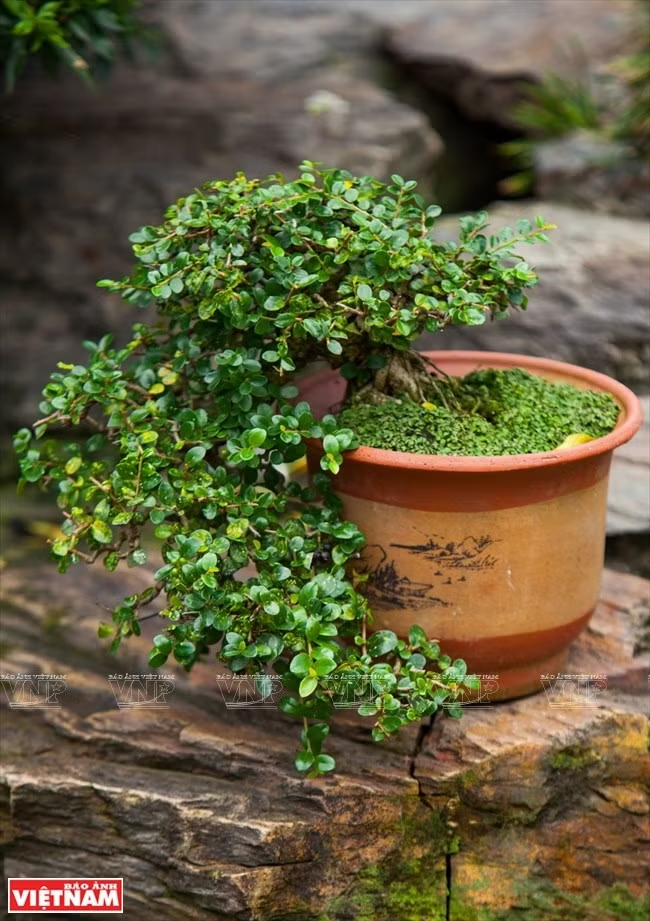
Bonsai tree planting has become a growing industry in Vietnam. The interest in this art is huge among people with a natural affinity for bonsai trees.
Illustrative image (Photo: VNA)
Hanoi (VNA) - Bonsai tree planting has become a growing industry in Vietnam. The interest in this art is huge among people with a natural affinity for bonsai trees.
A bonsai is a miniature tree planted in a pot or rock. The art originates from Japan.
In Vietnam, it’s common to see them everywhere and the trees are seen as magical things as people believe they bring good fortune, long life and strengthen family ties.
“Most Hanoians live in quite small areas such as small houses and small streets, they want to bring a natural and living space to their rooms so they can enjoy the greenery at home,” said Nguyen Quang from the Thang Long Art Ornamental Plant Association.
Previously, many people reckoned that this hobby was for old people, however nowadays there are many more people from all walks of life interested in bonsai growing.
Dinh Tung, from Hanoi, said he has known about bonsai growing for more than a decade.
“Bonsai growing requires enthusiasm, meticulousness and patience,” he added.
A bonsai work is a miniature image of old trees, with miniature living landscape called Hon Non Bo. These landscapes imitate sceneries of traditional Vietnamese landscapes in islands, mountains and forests which requires skillful hands, meticulousness and the love for trees.
“We want to create the most natural bonsai trees, we want to create a century-old tree in a plot with a subtle and natural beauty,” said Nguyen Quang.
A bonsai is not only an ornamental tree, but also a miniature living art which imitates the vitality of nature in art./.
VNA
Related News
Flower arrangement has long been popular among Vietnamese people on the occasion of Lunar New Year (or Tet) holiday.
A flower street with the theme of “Home Hanoi Xuan 2021” is set to be held for the first time between February 7 and 17 in Splendora urban area of Hoai Duc district in Hanoi in order to celebrate the upcoming Lunar New Year Festival, known locally as Tet.
The Lunar New Year, or Tet, is an occasion to honour traditional values and remind the younger generation to preserve and promote Vietnam’s beautiful cultural identities. An old Tet market has been enacted in Hoi An ancient town, attracting many local and foreign visitors.
Organic banh chung (square glutinous rice cake) sold in Ho Chi Minh City for the first time for Tet (Lunar New Year) has become very popular.
One of the exhibition's highlights is the "Our Sound" installation, where visitors become part of the artwork itself. As multiple participants interact simultaneously, sound and light merge into a shared composition, conveying messages of connection, sharing and collective responsibility for building sustainable communities in harmony with nature.
The programme retraced the city's half-century journey of construction and development while conveying the affection and pride of people across the country for Vietnam's economic powerhouse.
Unlike conventional fireworks that are launched directly into the sky, water fireworks are fired into the water first. After absorbing water, they burst upward from the surface, creating striking light effects against the backdrop of the Saigon River.
Chinese entertainment stars are increasingly choosing outfits by Vietnamese designers for red carpet events, concerts, magazine shoots and international appearances, propelling Vietnamese fashion into the spotlight across Chinese social media and strengthening its presence in one of Asia's largest fashion markets.
The “Vietnam Day in Skopje 2026” event has been held in the heart of Skopje, bringing Vietnam’s cultural heritage and contemporary image closer to the people of North Macedonia and international visitors.
The event opened a series of commemorative activities marking 50 years since Saigon – Gia Dinh was officially named after President Ho Chi Minh (July 2, 1976–2026).
Dr. Ngo Phuong Lan, Chairwoman of the Vietnam Cinema Promotion and Development Association and Director of DANAFF IV, said the Politburo's Resolution No. 57-NQ/TW on breakthroughs in science, technology, innovation, and national digital transformation, and Resolution No. 80-NQ/TW on the development of Vietnamese culture have created a solid foundation for advancing cultural industries and a creative economic sector, and strengthening IP protection, opening up new opportunities for Vietnam's film sector.
Titled "The Last Bullet," the film follows the remarkable journey of the Olympic shooting champion, highlighting the perseverance, discipline, coach-athlete bond and personal sacrifices behind his historic achievement.
The photo exhibition featured vivid images of Vietnam's majestic natural scenery, rich cultural heritage, distinctive customs and centuries-old traditional craft villages.
The festival conveyed a meaningful message on safeguarding and promoting ethnic cultural identities to both domestic and international audiences. It helped raise public awareness and community responsibility while creating new momentum for tourism development, cultural industries and traditional crafts closely associated with the lives of Cham people in the new era.
Jointly organised by the Vietnam Fine Arts Association, the Guangxi Arts University of China and the Lijiang School of Painting of Guangxi, the exhibition features more than 90 selected paintings which cover a wide range of subjects, including landscapes, flowers, birds and portraits.
Held from June 26 to 28 around West Lake, the festival featured a vibrant programme of cultural performances, exhibitions, hands-on experiences and tourism promotion activities, helping showcase Hanoi as a safe, friendly and culturally rich destination.
After three editions under the theme "Bridging Asia", DANAFF IV has adopted the new theme "Bridging Asia to the World", reflecting its ambition to connect Vietnamese cinema more closely with regional and global film industries.
This year’s race route once again left a strong impression as participants passed through some of Ly Son’s most iconic landscapes, including windswept coastal roads, dramatic volcanic rock formations and distinctive green garlic fields.
The two teams were selected by the the jury of DIFF 2026 after the qualifying rounds, based on criteria including concept and theme, creativity, pyrotechnic effects, synchronisation between music and fireworks, overall performance quality, and audience impact.
Centred on presenting a Vietnam that is youthful and dynamic while remaining deeply rooted in cultural identity, the festival offered a diverse programme combining exhibitions, cultural experiences, cuisine, performing arts and film, contributing to the promotion of Vietnam’s image and people to Czech and international audiences.
Xam singing, a folk art form with a history of more than 700 years, is not only a distinctive form of performance but also a living archive of Vietnamese cultural memory, reflecting everyday life, emotions, and aspirations across generations.
Themed "Vision," the two teams brought the festival's qualifying round to a spectacular close with performances that combined artistic storytelling, synchronised music and cutting-edge pyrotechnic techniques.
The pagoda preserves 896 woodblocks, including 26 sets of Buddhist texts and several unidentified pieces.
With its larger scale and broader international participation, Sports Festival 2026 is expected to become one of Vietnam's standout sporting events this summer while enriching community activities and supporting tourism during the peak travel season.